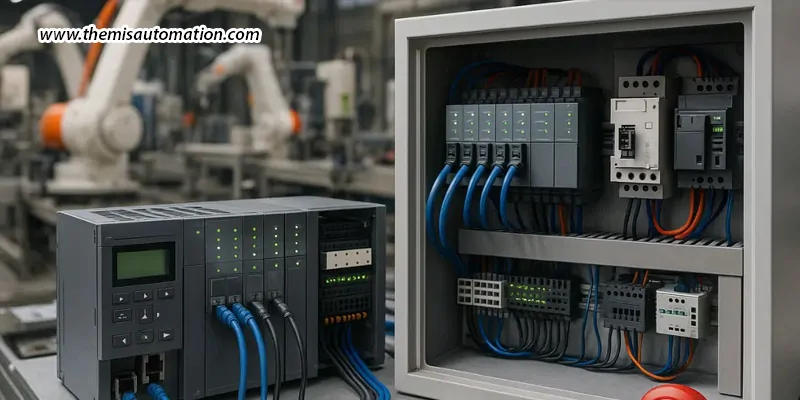
Modern manufacturing has evolved far beyond manual control panels and isolated machines. Today’s factories are driven by speed, precision, consistency, and data. To meet rising market demands, manufacturers must ensure uninterrupted operations, minimal downtime, high product quality, and optimal resource utilization. At the core of this transformation lies Programmable Logic Controller (PLC) automation – the silent yet powerful backbone that keeps modern manufacturing running efficiently. PLC automation is not just a technological upgrade; it is a strategic necessity. From controlling simple conveyor belts to managing complex multi-stage production lines, PLCs play a central role in shaping how industries operate, scale, and compete in a global marketplace.
Understanding PLC Automation
A Programmable Logic Controller (PLC) is an industrial computer specifically engineered to monitor inputs, process logic, and control outputs in real time. In contrast to traditional computers, PLCs are designed to endure challenging industrial conditions, such as high temperatures, electrical interference, vibrations, and continuous operation. PLC automation substitutes manual control systems and hardwired logic with adaptable, programmable logic. Sensors gather real-time data from machines and processes, while PLCs evaluate this data according to established programs, leading to immediate responses from outputs like motors, valves, and actuators. This closed-loop system guarantees precision, dependability, and consistency – attributes that are crucial in contemporary manufacturing.
Key benefits of PLC Automation in contemporary manufacturing
PLC automation has become the backbone of modern manufacturing. From improving efficiency and product quality to enhancing safety, flexibility, and data-driven decision-making, PLC systems play a crucial role in ensuring reliable, scalable, and future-ready industrial operations.
- Enhancing operational efficiency
One reason why PLC automation is essential in contemporary manufacturing is its capacity to enhance operational efficiency. PLC-controlled systems function continuously with minimal human involvement. They perform tasks more quickly and reliably than manual systems, guaranteeing optimal cycle times and seamless workflows. Automated sequencing removes unnecessary delays, decreases idle time, and ensures that every process step is carried out exactly as planned. This efficiency results in increased production output, reduced reliance on labour, and uniform operational performance across shifts. In high-volume manufacturing settings, even minor improvements in efficiency can result in substantial cost savings over time.
- Minimizing human error and enhancing safety
Human error frequently leads to production interruptions and workplace incidents. The use of PLC automation greatly decreases dependence on manual processes, thus reducing mistakes stemming from fatigue, misjudgement, or inconsistency. In terms of safety, PLCs are vital for emergency shutdown systems, interlock logic, overload protection, and alarm and fault management. By consistently monitoring system conditions, PLCs can initiate prompt actions in response to unusual situations, safeguarding both personnel and equipment. Consequently, PLC automation is a critical element of contemporary industrial safety standards.
- Minimizing downtime and enhancing reliability
Unexpected downtime poses a major challenge for manufacturers. Equipment malfunctions, process errors, and slow troubleshooting can disrupt production and lead to considerable financial losses. PLC automation enhances reliability by facilitating real-time fault detection, offering diagnostic information for swift troubleshooting, and enabling predictive maintenance through trend analysis. With effectively designed PLC programs and monitoring systems, problems can be detected early, often prior to a total breakdown. This proactive strategy minimizes downtime, prolongs equipment lifespan, and boosts overall plant reliability.
- Ensuring consistent product quality
Maintaining product consistency is essential for customer satisfaction and adherence to regulations. PLC automation guarantees that manufacturing processes adhere to specific parameters consistently, reducing the variations that may arise from manual control. PLCs accurately manage temperature, pressure, speed, and timing. By ensuring strict process control, manufacturers can maintain uniform quality across different batches. This is especially crucial in sectors like pharmaceuticals, food and beverage, automotive, and electronics, where even slight deviations can result in product rejection or pose safety hazards. Furthermore, automation facilitates the rapid identification of deviations, enabling corrective measures to be taken before defects develop into significant losses.
- Cost efficiency and long-term ROI
Although PLC automation necessitates an initial investment, it provides significant long-term benefits. By lowering labour expenses, decreasing material waste, enhancing energy efficiency, and avoiding downtime, PLC systems enable manufacturers to realize a robust return on investment. Key cost advantages include reduced operating costs, lower maintenance expenses, better asset utilization, and increased production predictability. Ultimately, these benefits surpass the initial costs, rendering PLC automation a financially wise choice for manufacturers of any scale.
- Flexibility and scalability in manufacturing
Contemporary manufacturing necessitates flexibility. Variations in products, evolving customer needs, and shifting market conditions call for systems that can swiftly adjust. PLC automation provides unparalleled flexibility by enabling manufacturers to alter production logic without the need for physical rewiring, integrate new machines or processes effortlessly, and expand operations in response to increasing demand. This level of adaptability is especially beneficial for manufacturers looking to enhance capacity, launch new product lines, or tailor production without significant infrastructure modifications.
- Facilitating data-driven decision making
In the current digital manufacturing landscape, data holds equal importance to machinery. PLCs serve as the main data collection hubs on the shop floor, gathering real-time insights related to production performance, machine health, and process efficiency. When combined with SCADA, MES, or IIoT platforms, PLC automation facilitates performance monitoring, energy usage analysis, quality tracking, and production reporting. This data-driven perspective enables management to make well-informed decisions, enhance processes, and consistently improve manufacturing performance.
- Smooth integration with Industry 4.0 technologies
PLC automation is fundamental to Industry 4.0 initiatives. Although cutting-edge technologies like artificial intelligence, cloud analytics, and digital twins are gaining prominence, PLCs continue to serve as the execution layer that links digital intelligence with physical operations. Contemporary PLC systems offer ethernet-based communication, integration with robotics and vision systems, cloud connectivity for remote monitoring, and cybersecurity measures for industrial networks. In the absence of PLC automation, smart factories would be deprived of the real-time control and responsiveness necessary for effective operation.
The role of PLC automation companies
A reliable PLC automation system relies heavily on its design, implementation, and support. Expert PLC automation companies offer specialized knowledge in system integration, programming, commissioning, and maintenance. In this context, Themis Automation has established itself as a trusted PLC automation company in Gujarat, providing industry-focused expertise and customized solutions. Their responsibilities go beyond mere installation to encompass understanding specific industry requirements, creating tailored automation solutions, guaranteeing adherence to safety and quality regulations, and delivering continuous technical support and updates. By collaborating with a seasoned automation provider, manufacturers can fully realize the advantages of PLC automation while steering clear of typical implementation hurdles.
PLC automation has emerged as the foundation of contemporary manufacturing, fulfilling the essential demands of today’s industries – efficiency, consistency, safety, flexibility, and intelligence. As the manufacturing industry continues to progress, PLCs will persist as the core of automated systems, connecting machines, data, and decision-making processes. For manufacturers aiming to maintain a competitive edge in a swiftly evolving industrial environment, investing in PLC automation is no longer a choice. With an effective automation strategy and professional support, PLC systems can revolutionize manufacturing operations into intelligent, resilient, and future-ready enterprises.