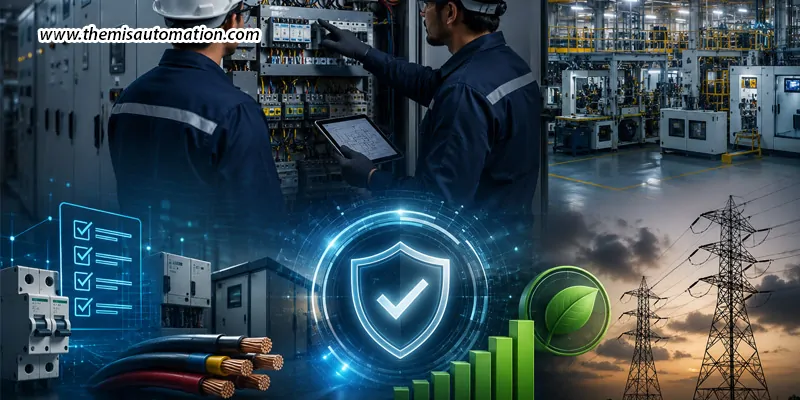
Industrial electrical systems form the foundation of modern manufacturing, powering machinery, automation, lighting, and critical operations. As industries adopt advanced technologies, electrical infrastructure must do more than keep production running; it must also ensure compliance, safety, and energy efficiency. These three elements work together to improve equipment reliability, reduce energy losses, prevent workplace hazards, and support uninterrupted operations. Rather than being viewed solely as a regulatory requirement, compliance should be seen as a driver of long-term performance and cost savings. Through proper system design, regular inspections, testing, commissioning, and ongoing maintenance, businesses can build electrical systems that are safe, efficient, and prepared for future growth.
The connection between compliance, safety, and energy efficiency
Compliance, safety, and energy efficiency are interconnected aspects of a well-designed electrical system. Following industry standards ensures that electrical infrastructure operates within defined safety and performance parameters. Proper load distribution, correctly rated components, effective protection systems, and appropriate installation practices help prevent issues such as overloading, voltage fluctuations, excessive heat generation, and unnecessary power losses. These measures not only reduce electrical hazards, but also improve overall system efficiency by minimizing energy wastage and enhancing equipment performance. A compliant electrical system requires fewer corrective interventions, experiences reduced downtime, and delivers more reliable operation throughout its lifecycle. Therefore, compliance should be viewed as a foundation that enables safer working conditions, optimized energy usage, and long-term operational efficiency.
Ensuring compliance with industry safety standards
Non-compliant electrical infrastructure often creates risks that remain unnoticed until a serious incident occurs. Common examples include overloaded electrical panels, improper cable installations, aging insulation, inadequate circuit protection, and poorly coordinated protection systems. These issues may result in equipment damage, electrical fires, unexpected shutdowns, or injuries to personnel. Industrial electrical systems are thus required to comply with applicable electrical regulations and safety standards throughout their lifecycle. Maintaining compliance involves evaluating several critical aspects, including power distribution systems, protective devices, earthing and grounding arrangements, cable sizing and routing, panel configurations, equipment isolation mechanisms, and emergency shutdown provisions. Regular assessments ensure these systems continue operating safely under changing production demands. By maintaining compliance, organizations significantly reduce electrical risks, equipment failures, production interruptions, and costly regulatory issues while ensuring safer and more reliable operations.
Why outdated electrical components increase energy losses
While compliance focuses on safe operation, it also directly influences energy performance by ensuring that electrical systems operate efficiently and within recommended limits. Many industrial facilities continue operating equipment installed decades ago. Although these systems may still function, aging electrical infrastructure often contributes to hidden inefficiencies. Deteriorated cable insulation, loose electrical connections, obsolete distribution panels, and aging protection devices create unnecessary heat and waste significant amounts of energy over time. Replacing outdated components not only improves safety, but also contributes directly to energy efficiency. Modern electrical infrastructure is designed to deliver power with minimal losses, while supporting stable operation under varying load conditions. Upgrading aging electrical systems with improved wiring, modern components, and efficient distribution panels enhances power distribution efficiency while reducing avoidable energy losses.
Commissioning and periodic audits
Apart from upgrading equipment, ensuring that electrical systems are correctly installed and configured is equally important for achieving long-term efficiency and safety. Comprehensive commissioning ensures every part of the electrical system performs as per the design specifications. Without proper commissioning, hidden configuration errors may lead to excessive energy consumption, unstable equipment performance, and safety hazards. Commissioning verifies that the equipment functions correctly, the control systems communicate properly, the safety mechanisms perform reliably, electrical loads are balanced appropriately, and the protection devices operate as intended. However, simply installing new infrastructure is not enough; periodic electrical audits and commissioning are equally important. Timely audits provide a structured method of evaluating whether the existing infrastructure continues to operate safely and efficiently. Audits typically examine equipment condition, electrical safety, power quality, load distribution, system capacity, and energy consumption patterns. Rather than identifying problems after failures occur, audits support proactive maintenance and informed decision-making.
The role of certification after system modifications
Changing or expanding production may require new machinery, automation upgrades, and additional distribution panels, all of which can affect electrical infrastructure. Whenever significant modifications occur, electrical systems should be re-evaluated and appropriately certified to confirm that the new installations meet applicable standards. Certification also ensures that the existing systems remain compatible, safety requirements continue to be satisfied, and that electrical performance has not been compromised. This process assures that infrastructure upgrades support both operational efficiency and workplace safety. It also helps identify potential risks before they become costly issues, reduces unplanned downtime, simplifies future maintenance activities, and provides confidence that the facility can accommodate continued expansion without compromising electrical reliability.
Practical steps for maintaining safe and efficient electrical systems
Organizations can strengthen compliance, improve safety, and enhance energy performance by adopting several best practices.
- Upgrading aging infrastructure: Replacing outdated wiring, panels, and protection devices reduces energy losses, improves reliability, and supports expanding operational requirements.
- Prioritizing proper commissioning: Every new installation or upgrade should undergo comprehensive commissioning to verify electrical performance, safety functions, and operational reliability.
- Scheduling regular electrical audits: Routine assessments identify hidden risks before they develop into costly failures while revealing opportunities to improve energy efficiency.
- Verifying systems after every major modification: Electrical infrastructure should always be inspected and tested after installing new equipment or modifying production layouts to ensure continued compliance.
This approach creates systems that consume less energy, while maintaining the highest standards of operational safety.
Why professional electrical consultancy matters
Industrial electrical systems have become increasingly complex with the adoption of advanced machinery, automation, and control systems. Managing these complex systems requires specialized technical expertise to ensure safe operation, regulatory compliance, and optimized performance. Professional electrical consultants evaluate the entire electrical infrastructure including power distribution networks, protection systems, load capacity, and equipment condition. They also offer electrical safety measures and opportunities for efficiency improvements. This comprehensive approach enables industries to identify hidden risks before they develop into serious operational problems. Professional consultants also help organizations plan infrastructure upgrades strategically, ensuring that improvements enhance both compliance and long-term energy performance. Partnering with experienced consultants can help industries achieve these objectives effectively. Themis Automation provides commercial electrical consultancy services, delivering comprehensive system assessments, safety improvements, compliance support, and energy-efficient solutions that enhance electrical infrastructure reliability and performance.
A reliable electrical infrastructure is essential for industries aiming to maintain operational continuity and adapt to future demands. Beyond supporting daily processes, well-managed electrical systems contribute to stronger decision-making, improved resource utilization, and greater confidence in business operations. As industrial environments continue to evolve, organizations must take a proactive approach toward managing their electrical assets. Investing in expert evaluation, strategic improvements, and continuous system optimization helps create a foundation that supports growth, resilience, and sustainable performance. A forward-looking electrical strategy enables industries to remain competitive while meeting the challenges of an increasingly technology-driven landscape.