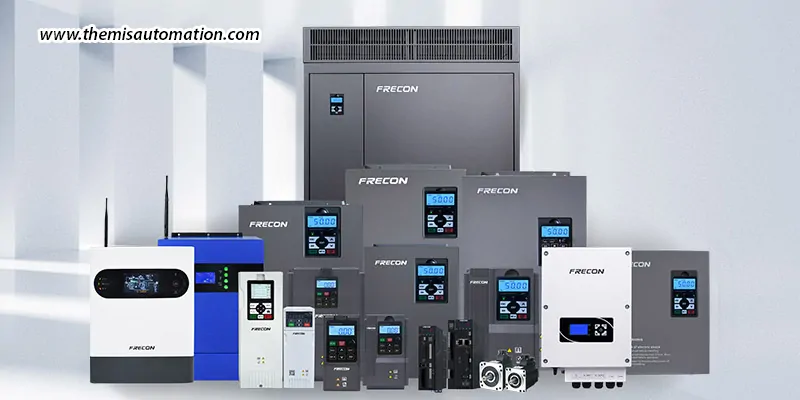
Selecting the right motor drive is a critical decision when designing or upgrading an industrial automation system. Beyond merely powering a motor, the drive significantly influences energy efficiency, equipment reliability, process control, maintenance needs, and overall operational expenses. A poorly chosen drive can lead to frequent downtimes, subpar motor performance, and accelerated wear on equipment, whereas the right choice can boost productivity and provide long-term value. FRECON general purpose drives are tailored for a diverse array of industrial applications, such as manufacturing, water treatment, HVAC, material handling, and food processing. By understanding your application requirements, you can select a drive that ensures reliable, efficient, and consistent performance.
Why drive selection matters
Industrial motors account for a substantial portion of the electricity consumed in manufacturing and process industries. Merely installing a variable frequency drive (VFD) is insufficient for maximizing efficiency; the drive must be appropriately matched to the specific application. A well-chosen FRECON general purpose drive can:
- Enhance energy efficiency
- Provide accurate motor speed control
- Minimize mechanical stress
- Extend equipment lifespan
- Improve process consistency
- Reduce maintenance expenses
- Boost overall system reliability
Conversely, an undersized or incorrectly configured drive may fail to meet operational requirements, while an oversized drive can lead to higher initial costs without delivering equivalent advantages.
Key factors to consider when choosing a FRECON general purpose drive
Choosing the right FRECON general purpose drive requires evaluating several technical and operational factors to ensure optimal motor performance, improved energy efficiency, reliable operation, and long-term value.
- Application requirements
Before selecting a drive, it is important to understand the specific operational requirements of the application – the type of machine being controlled, whether the motor needs to work continuously or intermittently, whether the application requires precise speed regulation, and whether the load will vary or stay constant throughout operation. Considering these factors helps determine the drive specifications required for efficient operation.
- Matching the drive to motor specifications
Ensuring compatibility between the drive and the motor is another important consideration. The drive should be appropriately rated for the motor’s power, as an undersized drive may result in overload conditions, while an oversized one can increase installation costs without adding significant value. It is equally important to ensure that both the drive and motor operate at the same voltage for safe and efficient operation. The drive should also comfortably accommodate the motor’s full-load current while providing adequate capacity for temporary overloads. It should also support the operating frequency required by the application.
- Load characteristics
Choosing a drive without considering the load characteristics can reduce performance, as different industrial applications place different demands on motors. For constant torque applications, where stable torque is required across the operating speed range, the drive must provide sufficient torque, while maintaining smooth acceleration and deceleration. On the contrary, for variable torque applications, speed control is essential as power consumption decreases rapidly with reducing motor speed.
- Starting and stopping requirements
Some industrial machines need to be started just once each day, after which they run constantly. Then, there are other machines that need to be started and stopped multiple times during a production shift, which places significant stress on motors and mechanical components. The drive used here must have soft-start capability, allowing motors to accelerate gradually, rather than drawing excessive inrush current.
- Speed control requirements
Some applications require only basic speed adjustment, while others may require highly consistent speed, regardless of load changes. When selecting a drive, it is thus essential to consider the required speed range, speed accuracy, acceleration time, deceleration time, and torque requirements at low speed. Considering all these elements and choosing relevant appropriate control settings ensures optimal process performance.
- Environmental conditions
Some industrial facilities operate in clean manufacturing environments, while others face dust, moisture, vibration, or extreme temperatures. These conditions can significantly impact drive performance and service life. Excessive heat may reduce component lifespan, dust can restrict ventilation and affect cooling efficiency, while humidity can cause corrosion and internal damage. Therefore, selecting a drive suitable for the operating environment, with proper enclosure protection and adequate airflow, is essential for ensuring reliable performance, preventing overheating, and extending operational life.
- Energy efficiency considerations
Electric motors account for a significant share of industrial electricity consumption. Selecting an efficient drive contributes to reduced energy waste, lower carbon emissions, improved sustainability, and lower operating costs. The drive chosen should optimize motor performance by adjusting speed to match actual process requirements, rather than operating continuously at maximum capacity. Applications involving pumps and fans often achieve substantial energy savings through variable speed operation.
- Built-in protection features
Industrial equipment is often exposed to electrical fluctuations and unexpected faults that can affect performance and cause costly downtime. To maintain reliable operation, effective protection features are essential. A quality drive should include safeguards such as overcurrent, overvoltage, undervoltage, overtemperature, motor overload, short-circuit protection, and phase loss detection. These functions help prevent equipment damage, enhance operational safety, and reduce unexpected failures, ensuring smoother performance and improved reliability in industrial applications.
- Maintenance requirements
Maintenance costs play an important role in determining the total cost of ownership of industrial equipment. A drive should require minimal routine maintenance, while delivering consistent performance over time. Regular inspections should include cleaning ventilation paths, checking electrical connections, monitoring operating temperatures, reviewing fault history, and inspecting cooling fans. Implementing preventive maintenance practices helps maximize service life, minimize unexpected failures, and ensure consistent, reliable performance throughout the equipment’s operational lifespan.
Why FRECON general purpose drives are a practical choice
FRECON general purpose drives are engineered to fulfill the requirements of various industrial applications, making them an ideal option for companies in search of reliable and efficient motor control. Their features include flexible speed regulation, energy-efficient operation, strong protective measures, and compatibility with contemporary automation systems, allowing them to accommodate a wide range of equipment, from pumps and fans to conveyors and manufacturing machinery. Whether the goal is to enhance process efficiency, lower energy usage, or improve equipment reliability, these drives offer the necessary adaptability for today’s dynamic industrial settings. As a reputed Frecon distributor in Gujarat, Themis Automation provides an extensive selection of FRECON general purpose drives, supported by technical knowledge and reliable assistance. Companies can count on Themis Automation for effective drive solutions customized to meet various industrial automation and motor control needs.
Selecting the right FRECON general purpose drive involves more than simply pairing a drive with a motor. It necessitates a thorough assessment of application requirements, motor specifications, load characteristics, operating conditions, and long-term business objectives. A well-chosen drive can enhance energy efficiency, optimize motor performance, minimize maintenance, and improve overall process reliability. By understanding these selection criteria, industries can make educated choices that promote efficient and sustainable operations, while maximizing the return on their automation investments. As industrial automation continues to advance, investing in the right motor control solution is a strategic move toward achieving increased productivity, enhanced operational flexibility, and improved long-term performance.