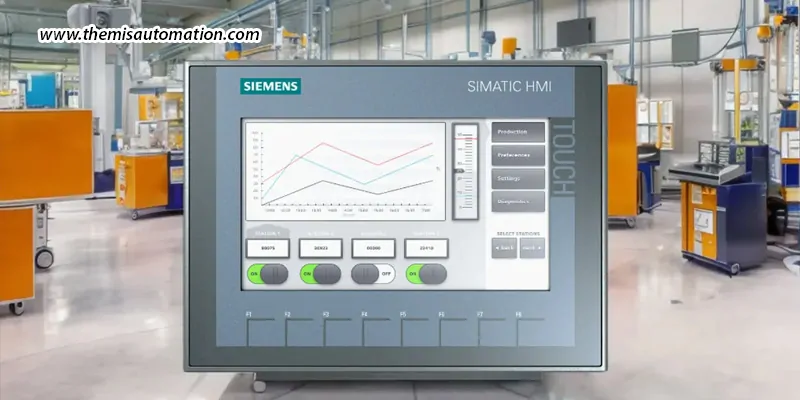
In modern industrial automation, human machine interface (HMI) panels serve as a critical link between the operator and the machine. They provide real-time monitoring, control, diagnostics and visualization of industrial processes, ensuring efficiency, accuracy and safety. The most used HMI solutions include HMI solutions from Siemens, especially the SIMATIC Basic Panel and Comfort Panel. Choosing the right HMI panel is not just a matter of display size and cost; it directly impacts operator experience, system performance, and long-term scalability. Understanding the differences between Siemens Basic and Comfort panels helps engineers and system integrators select the most suitable solution for their specific applications.
Understanding Siemens HMI Panels
Siemens HMI panels are part of the SIMATIC family and are designed for full integration with Siemens controllers, I/O systems and drives. These panels intuitively visualize the process and allow the operator to interact effectively with the machine. The two most commonly used categories are:
- Basic Panel – Entry-level HMI for simple applications
- Comfort Panels – Advanced HMIs designed for complex, high-performance systems
Although both panel types are designed for industrial environments and support integration with Siemens automation architectures, they differ significantly in performance, functionality, and application.
Siemens basic panels: Compact and cost-effective solutions
Siemens basic panels are designed for simple, small-scale automation tasks. They offer essential HMI functionality while maintaining simplicity and affordability. These panels typically have a compact design with screen sizes ranging from small to medium-sized interfaces. Support for touch and key input allows operators to perform basic monitoring and control tasks. These panels are well suited for applications where interface requirements are limited to displaying process values, basic alarms and simple controls. In terms of functionality, basic dashboards support standard visualization features such as text display, basic graphics, alarm processing, and trend viewing. They are integrated into the Siemens engineering environment, allowing efficient configuration along with PLC programming. Basic panels are typically used in applications such as packaging machines, small conveyors, HVAC systems and off-grid equipment where complexity is minimal and cost efficiency is important.
Siemens comfort panels: Advanced performance and flexibility
Siemens comfort panels are designed for demanding industrial environments and complex automation systems. They offer improved performance, larger screens, and advanced features for improved operator interaction. The comfort panel features a large, high-resolution display with advanced touchscreen functionality for detailed process visualization. It supports multilingual configurations, a user management system, and extensive alarm handling capabilities, making it ideal for global, large-scale operations. These panels are equipped with powerful processors and increased memory, allowing them to efficiently process complex graphics, animations, and large datasets. Advanced communication capabilities enable seamless integration with multiple devices and systems within an industrial network. These panels also provide advanced diagnostic tools that allow operators to quickly identify and resolve problems. This reduces downtime and improves overall operational efficiency. They are widely used in areas where precision, scalability, and advanced visualization are essential, such as automotive, process industries, large packaging lines, and machine tools.
Key differences between basic panels and comfort panels
Understanding the key differences between basic and comfort panels helps in selecting the most suitable HMI solution based on system requirements and operational complexity.
- Functionality and applicability: Basic panels focus on simplicity and basic functionality for small systems, while Comfort panels offer advanced functionality for complex processes and large automation environments.
- Ease of use: Basic panels are easy to configure and use, and are suitable for simple tasks. The comfort panel, on the other hand, offers enhanced user interaction and more control.
- Display quality: The comfort panel provides a larger, high-resolution screen for detailed viewing, while the basic panel provides a simple display suitable for monitoring limited data or basic graphical presentations.
- Performance features: Comfort panels feature more powerful hardware for faster response times and smoother operation, especially in high-performance, data-intensive industrial applications.
- Communication and integration: Both panels are integrated with Siemens controllers, but the comfort panel offers greater flexibility with additional interfaces and advanced networking capabilities for complex industrial systems.
Factors to consider when choosing an HMI panel
Choosing the right HMI panel requires a clear understanding of the machine requirements and future development needs. Here are the key factors to consider before making a choice.
- Application complexity
For simple machines with limited control requirements, a basic panel is usually sufficient. However, for complex systems that require advanced visualization and interaction, comfort panels are the best choice.
- Display requirements
If your application requires detailed process visualization, large displays, or high-resolution graphics, comfort panels offer clear advantages. Basic panels are suitable for simple displays with few data points.
- Performance requirements
Machines that operate at high speeds or perform complex processes benefit from the high processing power of the comfort panel. The basic panel works well for standard applications with moderate requirements.
- Integration and communication
Consider the number of devices and systems your HMI will need to interact with. Comfort panels offer great flexibility for integration into large industrial networks.
- User interaction
For applications that require multi-user access, multilingual support, or an advanced user interface, comfort panels provide the features you need. Basic panels are more suitable for single operator environments.
- Budget considerations
Cost is always an important factor in automation projects. Basic panels offer a cost-effective solution for small systems, while comfort panels offer increased functionality and scalability to justify a higher investment.
Common mistakes to avoid
Selecting the right HMI panel is essential to ensure efficient operation, easy interaction, and long-term reliability, while avoiding common selection errors that can impact performance and cost.
- Underestimating scalability: Choosing a basic panel for a system that may expand later can limit functionality and lead to costly upgrades in the future.
- Over-specifying the HMI: Selecting a comfort panel for a simple application can result in unnecessary costs without delivering proportional benefits.
- Ignoring operator friendliness: A poorly designed interface can reduce efficiency and increase the risk of errors, making usability a critical factor.
- Mismatch with user requirements: It is important to choose an HMI that aligns with the operator’s skill level and application requirements for optimal performance.
Where to get your Siemens HMI panels
For Indian businesses and system integrators, sourcing genuine Siemens HMI panels from a reliable reseller is crucial to ensure consistent performance, product authenticity, and long-term support. High-quality HMIs play a vital role in maintaining operational efficiency, minimizing downtime, and enabling smooth human-machine interaction across industrial environments. Partnering with a trusted Siemens distributor in Ahmedabad, one like Themis Automation, provides access to a comprehensive range of basic and comfort panels suited for diverse automation needs. Such collaboration ensures expert guidance, technical assistance, and seamless integration with existing automation systems, helping organizations achieve optimized performance, improved scalability, and reliable operations across various industrial applications.
To conclude, the choice between Siemens basic and comfort panels depends on the specific needs of your application. Basic panels provide a practical and cost-effective solution for simple systems, while comfort panels provide advanced functionality for complex high-performance environments. By carefully evaluating factors like application complexity, display requirements, performance, and scalability, engineers can select the right HMI panel that enhances machine efficiency and operator experience. The correct selection can significantly improve the overall efficiency of your industrial automation system.