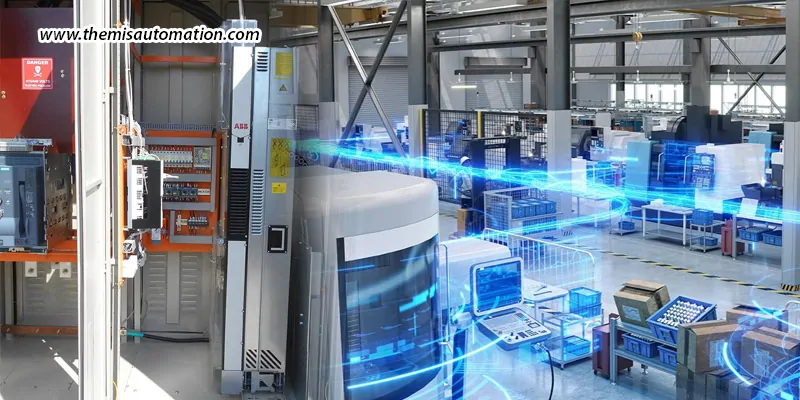
Step into a contemporary manufacturing facility, and you will observe machines operating in unison – robotic arms, conveyor systems, and production lines functioning effortlessly. At the heart of this synchronization is the industrial control panel (ICP), which serves as the essential command hub of factories. These panels combine power, automation, and intelligence to manage equipment, track performance, and reduce downtime. In their absence, plants would encounter inefficiencies and variable output. As industries adopt Industry 4.0, control panels have transformed from mere switches into sophisticated systems that enhance processes, lower energy usage, and boost productivity. This blog delves into how ICPs facilitate automation, improve productivity, and increase efficiency in modern manufacturing.
What are industrial control panels
An industrial control panel is fundamentally a box containing interconnected electrical components that oversee mechanical processes. These panels function as the nervous system of a facility, relaying commands, distributing power, and ensuring that machines communicate effectively with one another.
Key functions
- Control – Operate motors, pumps, conveyors, and other machinery.
- Monitoring – Offer real-time insights into system performance.
- Distribution – Oversee and balance power supply among various machines.
Types of industrial control panels
- MCC (Motor Control Center) Panels – Oversee multiple motors in heavy industries such as cement, steel, and power generation.
- PCC (Power Control Centre) Panels – Manage high-voltage power distribution in large-scale facilities.
- PLC (Programmable Logic Controller) Panels – Serve as the brains of automation, enabling machines to execute complex tasks with minimal human intervention.
- VFD (Variable Frequency Drive) Panels – Control motor speed to conserve energy and enhance performance.
- HMI-Integrated Panels – Human Machine Interfaces (screens and dashboards) that enable operators to engage with and manage processes.
Companies like Themis Automation, leading industrial control panel manufacturers, design and deliver customized MCC, PCC, PLC, and VFD panels that empower modern factories to achieve higher efficiency, automation, and reliability.
The role of industrial control panels in automation
Automation serves as the foundation of contemporary manufacturing. It minimizes human error, accelerates production, and enables companies to satisfy substantial global demand. At the core of this automation are industrial control panels.
- A link between humans and machines
Industrial control panels act as the essential connection between sensors, actuators, PLCs, and SCADA systems, ensuring that the appropriate command is delivered to the correct machine at the precise moment. Sensors constantly track parameters like temperature, pressure, and flow, while PLCs analyze this information to make informed decisions. After processing, the control panels effectively relay these commands, activating motors, conveyors, or alarms as necessary to uphold smooth and efficient operations.
- Automation in practice
In the automotive sector, control panels are crucial for coordinating robots that weld car bodies and apply paint with unwavering precision. In the food and beverage industry, they monitor oven and refrigeration temperatures to ensure product quality and safety. Likewise, in the pharmaceutical field, control panels maintain batch accuracy by controlling mixing times, ingredient ratios, and sterilization cycles, ensuring adherence to stringent industry standards.
- Advantages of control panel-driven automation
By minimizing manual involvement, industrial control panels allow human workers to concentrate on higher-value tasks that necessitate judgment and expertise. They also guarantee consistent quality, as machines can perform tasks with precision and accuracy repeatedly. Furthermore, control panels greatly enhance production speed, facilitating quicker cycles without sacrificing the quality of the final product.
The system of automation would falter without the intelligence and dependability offered by industrial control panels.
Enhancing productivity with industrial control panels
In manufacturing, productivity is of prime importance. Downtime, inefficiencies, and lack of synchronization can lead to significant financial losses. Industrial control panels enhance productivity by ensuring that machines work together seamlessly.
- Centralized monitoring
Operators have the ability to oversee the entire production line from a single control panel. With real-time dashboards, they can monitor which machines are operational, which are idle, and which require attention. This centralized monitoring helps to prevent minor issues from escalating into major downtime.
- Faster diagnostics
When an issue arises, control panels typically show error codes or activate alarms. This immediate feedback enables technicians to swiftly identify and resolve problems, significantly minimizing downtime.
- Synchronization across systems
Consider a bottling plant. If the conveyor belt operates too quickly while the capping machine falls behind, it can result in spilled bottles and wasted production. Control panels ensure that these processes are synchronized, facilitating smooth transitions between various production stages.
- Remote access and predictive maintenance
Contemporary panels enable engineers to monitor and even control machinery from a distance. Data collected over time can forecast potential machine failures, allowing for preventive maintenance before any breakdown occurs.
Thus, control panels not only keep machines operational—they also actively facilitate higher levels of output and efficiency.
Efficiency gains from industrial control panels
Efficiency is not merely about increasing output; it involves working more intelligently, utilizing less energy, reducing waste, and guaranteeing reliability. Industrial control panels serve as essential instruments for enhancing efficiency.
- Energy efficiency
Variable Frequency Drive (VFD) panels modify motor speeds based on demand, which helps to avoid unnecessary energy use and minimizes waste. Simultaneously, control panels enhance load distribution, ensuring that no individual motor is excessively strained. Consequently, manufacturing facilities witness a significant decrease in electricity expenses, rendering smart panels a financially savvy and energy-efficient choice.
- Automated fault detection
Rather than waiting for a malfunction, control panels can detect anomalies, such as a motor consuming excessive current, and deactivate it before any harm occurs. This not only safeguards the equipment but also lowers repair expenses.
- Optimized production cycles
Control panels maintain processes at peak speeds. By removing idle periods and ensuring that machines do not have to wait for each other, production cycles are expedited without sacrificing quality.
- Integration with renewable energy
Numerous industries are now incorporating renewable energy sources such as solar or wind. Industrial control panels facilitate the transition between grid electricity and renewable sources, ensuring seamless and uninterrupted operations.
Collectively, these features render industrial control panels essential for manufacturers aiming to achieve smarter, more sustainable, and more dependable operations in the current competitive environment.
In today’s rapidly evolving manufacturing landscape, efficiency, productivity, and automation are not just preferences, they are essential for survival. Industrial control panels act as the nerve centres that enable these objectives. They empower factories to automate intricate processes, coordinate operations, enhance production, and conserve energy – all while maintaining reliability. Whether in automotive facilities producing thousands of vehicles daily or in food processing plants packaging millions of items, industrial control panels discreetly manage the operations that sustain the global economy. As the manufacturing sector progresses, one fact is undeniable: without industrial control panels, contemporary factories would come to a standstill.